A simple introduction to one-point perspective and two-point perspective drawing for high school students.
What is perspective drawing?
Perspective drawing is a pictorial (3D) drawing method that represents how things appear smaller as they get further away. It is one of the most realistic drawing methods and is often used for final presentations to show clients what a product will look like in reality.
Key elements of perspective drawings
Perspective drawings include:
- Vanishing points: Points that other lines converge to.
- Horizon line / eye level line: An imaginary line that is positioned in line with the viewer’s eyes. For example, if you want to draw a scene from a bird’s eye view, the horizon line will be high on the page. If you want to draw a worm’s eye view, the horizon line will be low down the page.
There are three types of perspective: one-point perspective, two-point perspective, and three-point perspective. Note: Cambridge IGCSE and AS/A Level students only need to know one- and two-point perspective.
One-point perspective
One-point perspective has a single vanishing point. Most lines are drawn vertical, horizontal, or going toward the vanishing point (the only exceptions are curving lines or surfaces at unusual angles).
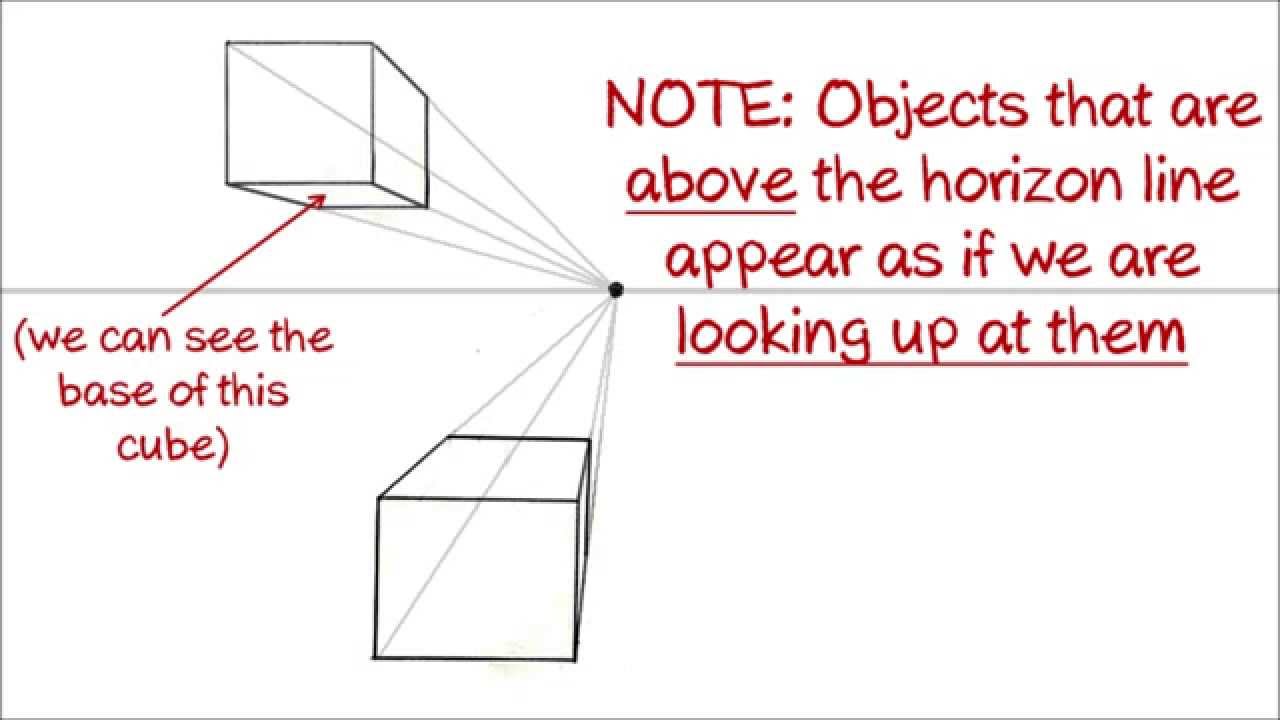
Surfaces that face the viewer appear as a true shape, without any distortion. Other surfaces are drawn receding toward the vanishing point, as illustrated by the photograph below.

Drawing in one point perspective is best when the subject is viewed ‘front-on’ (such as when looking directly at the face of a cube or the wall of building) or when looking directly down something long, like a road or railway track. It is popular drawing method with architects and illustrators, especially when drawing room interiors.
Note: If you need to draw something that is not facing you directly, but rather has a corner nearest to you, two-point perspective may be more appropriate.
How to draw using one-point perspective
- Draw a light horizon line (eye level line) horizontally across the page in line with the viewer’s eyes.
- Add a vanishing point to the horizon line and label this VP1. The vanishing point can be anywhere on this line, but should be directly in front of where you wish the viewer to stand. Often this is near the middle of the horizon line (but it doesn’t have to be).
- Begin by drawing an ordinary ‘flat’ view of the object, showing the true shape. If drawing a cube, both sides of the front face should be equal in length etc.
- Project corners toward the vanishing points to draw the remaining sides of the object, as shown in the tutorial below.
- You cannot measure along lines going toward the vanishing point. You must estimate lengths so they look in proportion.
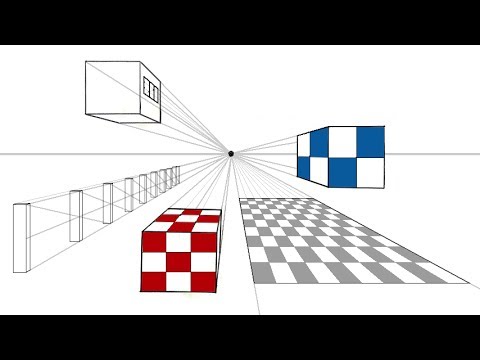
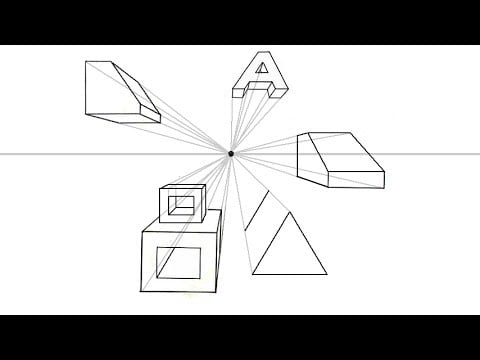
All of these skills are combined in the one point perspective room interior below:
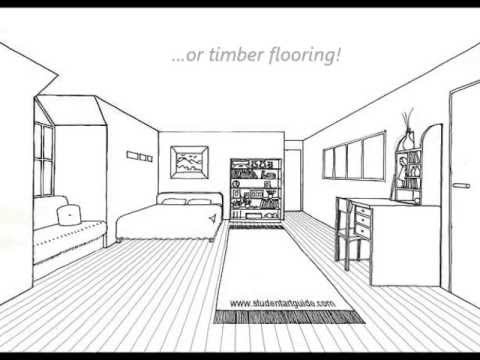

See a comprehensive guide to one-point perspective on our sister site, the Student Art Guide.
Note: One-point perspective can also be used as a method to enlarge or reduce a shape.
Two-point perspective
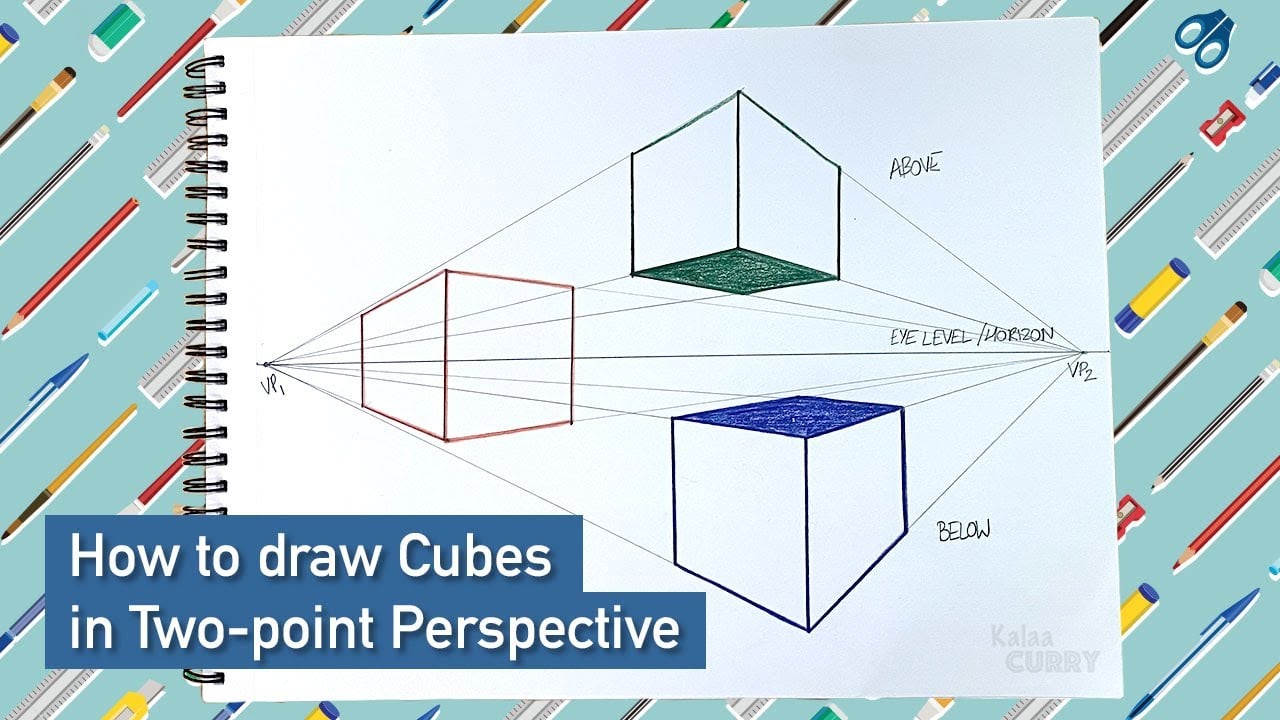
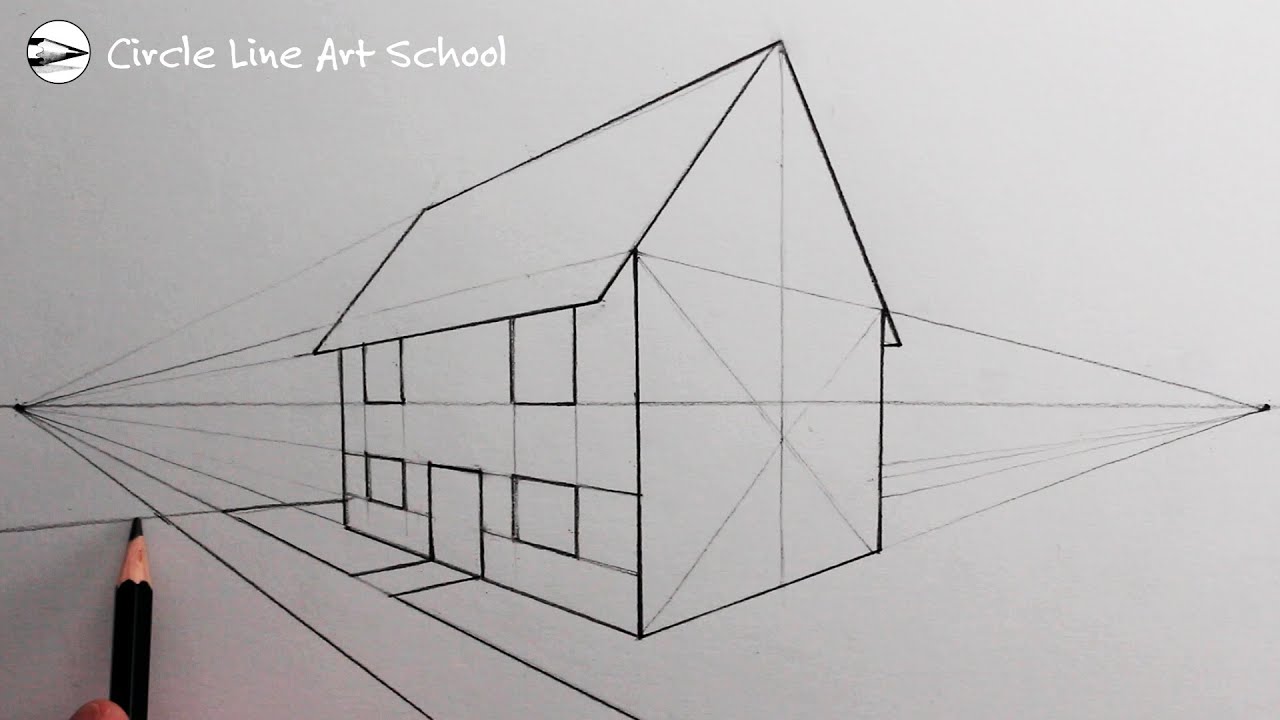
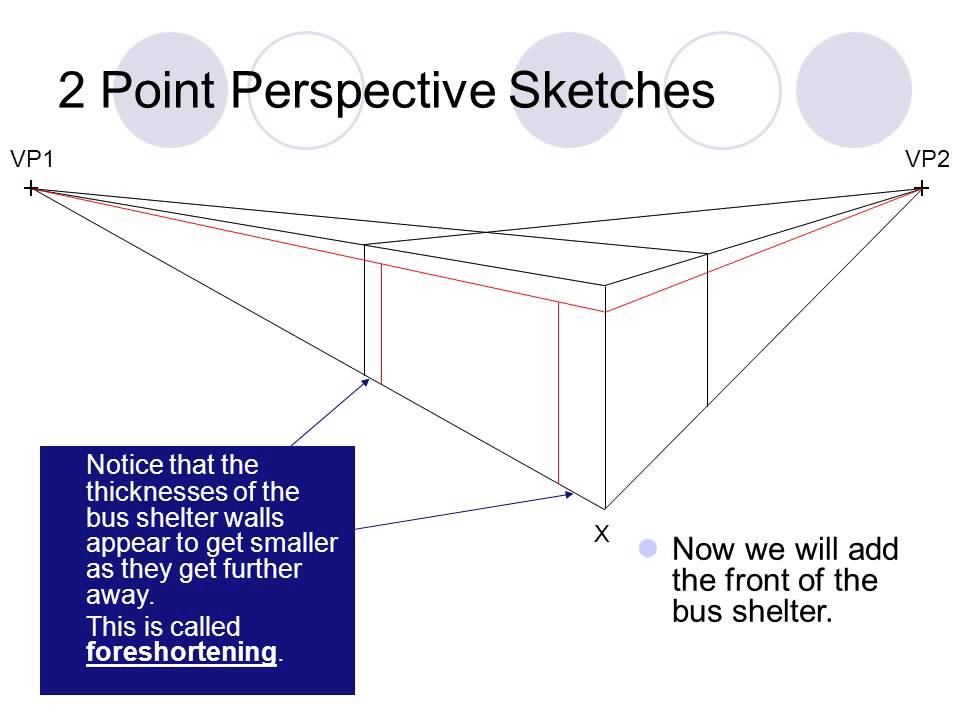
Two-point perspective has two vanishing points, drawn at either end of the horizon line. Most lines are drawn vertical or going toward the vanishing point (the only exceptions are curving lines or surfaces at unusual angles).
The object is drawn with one edge or corner facing the viewer, and all surfaces are drawn receding toward the vanishing points.
Perspective grids
Perspective drawings can often be sketched quickly using perspective grid paper that has lines converging towards vanishing points, such as the one point perspective grid below. (A printable copy of this grid can be located in this document from our sister site, the Student Art Guide here.)

Sample examination questions (IGCSE Paper 5)

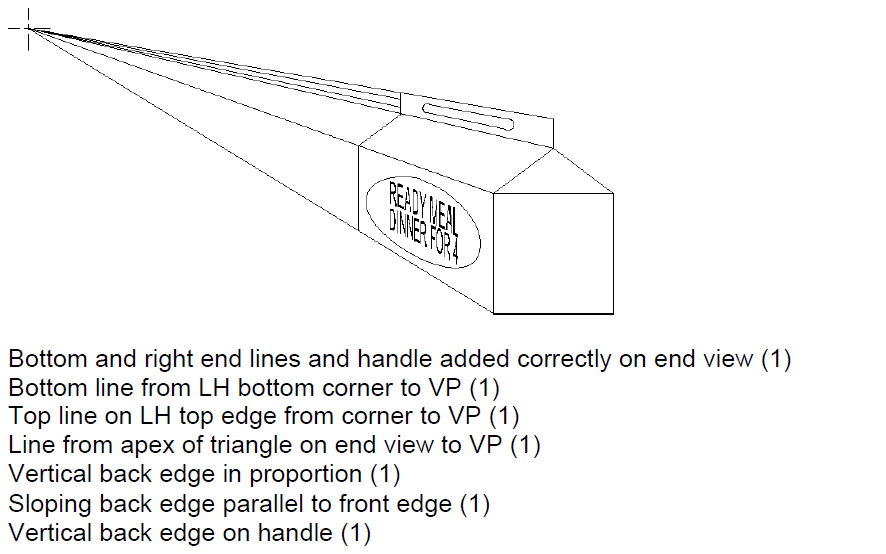
Examiner comment: This part of the question asked candidates to complete an estimated one-point perspective view of the ready meal box based on the given details. Candidates were required to show knowledge of one-point perspective drawing. Candidates who projected lines to the respective vanishing points and maintained appropriate proportions for the parts of the package achieved the best results.

Amiria has a Bachelor of Architectural Studies, Bachelor of Architecture (First Class Honours) and a Graduate Diploma of Teaching. She is a CIE Accredited Art & Design and Design & Technology Coursework Assessor. Amiria now teaches Art, Design & Technology at ACG Parnell College.