High school Design & Technology students often have to be familiar with a range of metal finishes and surface treatments as well as how to prepare a metal surface for finishing. This article summarises this topic and concludes with sample examination questions.
Preparing a metal surface for finishing
Before anything is painted or another finish applied, the surface must be cleaned and free of rust and other debris. It may also need filing/sanding/smoothing.
Cleaning
- Use a rag dipped in a solvent such as methylated spirits to clean the surface and remove dirt, grease, and oil (do not breathe in fumes and work in well-ventilated area) or wash with soap to remove dirt
- A wire brush or emery cloth (abrasive cloth) can be used to remove dust and oxidation (wear a face mask to prevent inhalation of particles)
- Dry thoroughly
- Clean, lint-free cloth or rag for wiping
This is necessary so the finish adheres well to the material and the finish is smooth and free of imperfections
Wet and Dry Sandpaper
- A special type of sandpaper that can be used either dry or wet
- Comes in a range of grit (rough through to smooth)
- Good for smoothing and polishing, as well as removing rust or paint from metal surfaces
- Often used wet to stop the sandpaper clogging
Autosol polish
- A general, all-purpose metal polish
- Mildly abrasive paste that comes in a tube
- Squeeze a small amount onto a soft cloth, rub onto the metal surface in circular motions, and then buff it off with a clean cloth
- Removes light scratches, tarnish, and surface marks, and leaves a bright, protective shine.
- Used after filing and sanding (for surface finishing – see more about metal finishes here)
Brasso polish
- A metal polish (the name comes from “brass”) that you put on a cloth and rub onto metal to clean / polish door handles / instruments etc (remove oxidation and make them shiny)
- Works well on brass, copper, and similar non-ferrous metals. For steel or aluminium, you can use Autosol (described above)
- Can also be used on cut edges of acrylic to remove fine scratches and make a clear, shiny edge
- Cannot be used on wood as it is oily and stains the surface
Different types of metal finishing methods
Paint – applied by brush, spray, or dipping to provide color and protect against corrosion.
High temperature paints can be used in heat-vulnerable areas, such as exhaust systems, engines, and stovepipes (these are typically silicone or ceramic-based)
Paint thinners are solvents that can be used to dilute paint, or to clean brushes, or to strip old paint from surfaces.
Ceramic coatings – spray-applied coatings (these are useful for providing heat resistance and corrosion resistance – can handle very high temperatures)
Sealants – protective coatings that fill tiny bumps in surface and create barriers against moisture and contaminants.
Preservatives – chemical treatments (oils, waxes, or solutions) that prevent corrosion
Anodizing – an electrochemical process creating a protective oxide layer on aluminum, can be dyed for color.
Chromium Plating (informally known as chrome plating) – a form of electroplating whereby a thin metal layer (chromium, nickel, gold, etc.) is applied using electrical current for appearance or protection.
Powder Coating – a dry powder (often a thermosetting or thermoplastic powder) is sprayed on, which clings to all surfaces (so it is good at getting into tiny gaps etc) – then heated to form a durable, uniform coating (thicker, more perfect finish than painting – less likely to chip etc, but requires specialised equipment and curing ovens)
Galvanizing – A zinc coating, typically applied by hot-dipcoating (where the metal is dipped in molten zinc), for excellent corrosion resistance. Steel is not rust-resistant, for example, but when galvanized you can use steel components outside.
Polishing – Mechanical process using progressively finer abrasives to create a mirror-like reflective surface (many stainless steel items are polished).
Brushing – Creating uniform directional scratch patterns for a satin or matte decorative finish.
Black Oxide – Chemical conversion coating creating a black finish with mild corrosion resistance.
Patina – Chemical solutions creating colored oxide layers, especially on copper, brass, and bronze.
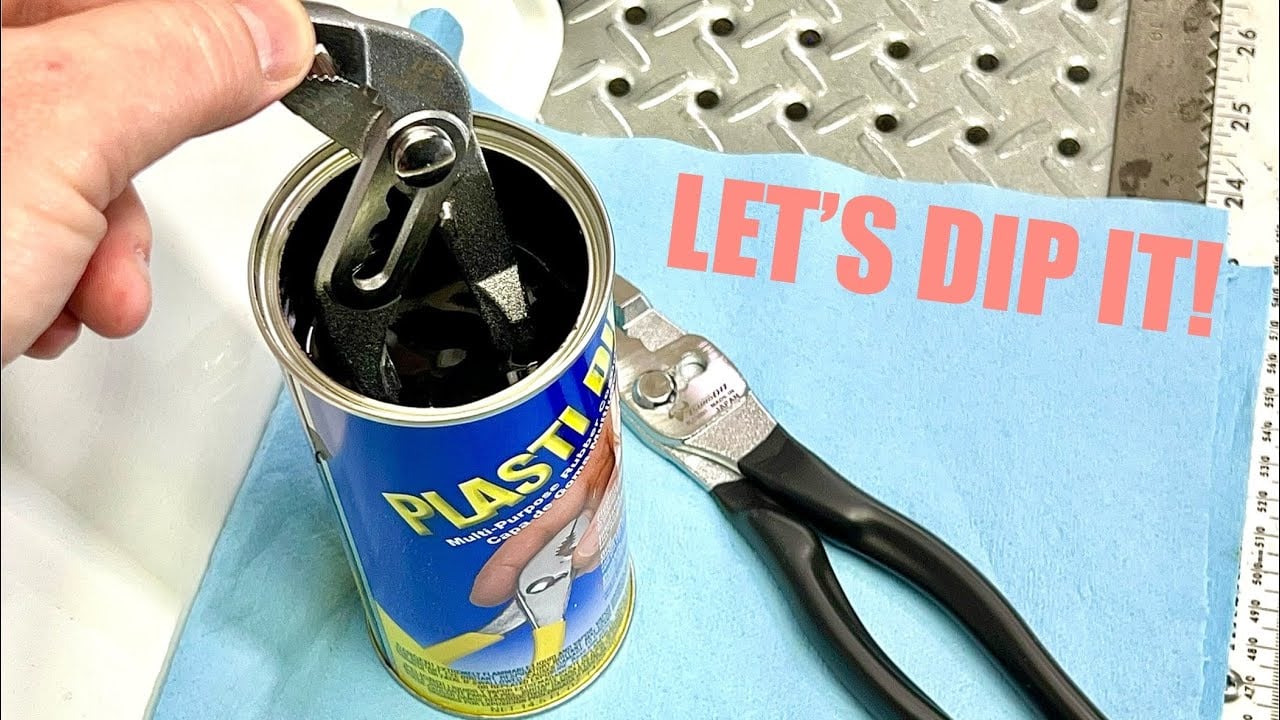
Plastic dip coatings
Offers uniform coverage on complex shapes. Unlike spray coatings, doesn’t lead to overspray / waste. Process:
- Organise a wire or magnetic support to hang item from (so it can hang while drying)
- Use an alcohol solution on a rag to clean surface of grease and debris to ensure plastic bonds well (use wire brush if needed first)
- Shake can of molten plastic dip solution (often a synthetic rubber solution or PVC)
- Some methods require heating the object first
- Insert item into the dipping solution, and slowly life out, ensuring recommended slow dip speed is followed (if you lift it out rapidly, less plastic sticks and it can have runs / splashes / uneven application etc)
- Modern automated machines sometimes heat the plastic after dipping, to improve adhesion and smooth out imperfections
- Hang to dry, ensuring any connecting parts are separated (so plastic doesn’t stick), with something underneath to catch any drips
- Seal dip solution to ensure it doesn’t dry out
- If multiple coats are required, allow sufficient drying time between coats
- Dip again, until desired thickness achieved
- Use an appropriate solvent to clean off any plastic in the wrong place
Safety precautions: Wear chemical-resistant gloves, eye protection, and protective clothing, ensure well ventilated and avoid breathing fumes.
Metal objects can be finished with textured or patterned surfaces (for example, they can be knurled which means they have a textured pattern of ridges or grooves cut into a metal surface (often cross-hatched / diamond pattern or straight ridges) creating a permanent texture that doesn’t wear off easily. Creates improved grip (important for parts that need to be turned or tightened), as well as for aesthetic reasons. Can be applied using a lathe (item spins, while a knurling tool with patterned grooves is held against it, or pressed into softer metals.
Note: Some metals, such as those that acquire a patina, are self-finishing, and do not require a special finishing treatment.
Ways of applying text or images to metal
- Stencil + spray paint
- Hand painting
- CNC engraving machine (a dog tag engraver is a simple example)
- Hand-held engraver (not very precise)
- Self-adhesive vinyl sticker (see more here)
- Centre punch & hammer used to make dotted lines (not very precise)
- Laser cutter (note: many laser cutters in school workshops cannot engrave or cut metal)
Sample examination questions (AS Design & Technology)


Examiner comment: Candidates gave a wide variety of answers to this question with stencilling and vinyl lettering being popular responses. Detailed answers included CAD/CAM and some excellent technical details on tools and equipment and how to use them correctly.


Examiner comment: This was generally answered well and most candidates achieved one mark as they correctly named a specific metal. Finishes mostly matched the specific metal detailed with chromium-plated a common response, but some candidates did not give a finish at all.


Examiner comment: Only stronger candidates answered this question well. Most candidates gave two reasons why the handle had a plastic coating.


Examiner comment: Most candidates were able to explain why Part B is knurled.


Examiner comment: This was generally answered well with candidates understanding the steps necessary to prepare and apply a finish to the mild steel parts.


Examiner comment: Candidates found it challenging to explain how a plastic coating could be applied to the handle. However, there were some clear explanations of plastic dip coating. Safety precautions were not always included or were generic.

Amiria has a Bachelor of Architectural Studies, Bachelor of Architecture (First Class Honours) and a Graduate Diploma of Teaching. She is a CIE Accredited Art & Design and Design & Technology Coursework Assessor. Amiria now teaches Art, Design & Technology at ACG Parnell College.